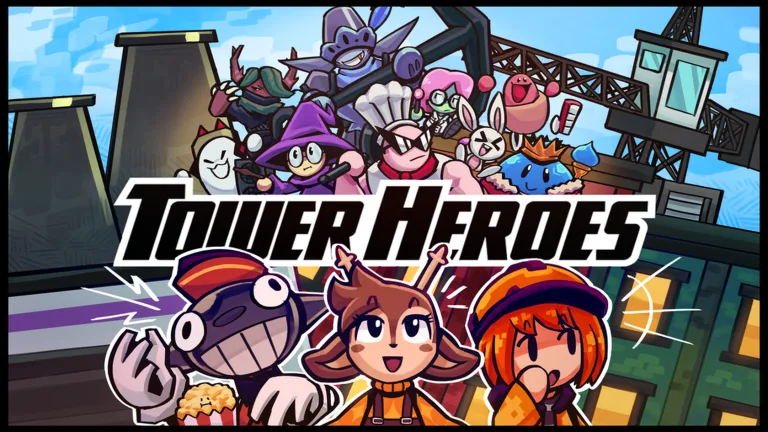
Tower Heroes Fracture: Is This Hero Still Worth Using?
Discover if Tower Heroes Fracture remains a viable pick in the current meta. We analyze his stats, competitive alternatives, and tips to maximize his power.
Published: Tower Heroes Wiki Editorial Team
Video Guide
The Downfall of Fracture (Tower Heroes)Table of Contents
In the ever-evolving landscape of Tower Heroes, few units have experienced as dramatic a shift in public perception as Fracture. Once hailed as the "Skeleton King" and a cornerstone of high-level strategies, this hero has seen his reputation fluctuate wildly over the years. Players often ask if Tower Heroes Fracture still holds the raw strength he was once famous for, or if he has truly fallen from grace.
Understanding the trajectory of Tower Heroes Fracture requires looking beyond simple damage numbers. It involves examining the game's balancing history, the introduction of newer, more versatile towers, and the specific mechanical quirks that define how he performs in a live match. If you are a player wondering whether to invest coins or time into this unit, this guide will break down everything you need to know about his current utility, his strengths, and why the community consensus has shifted so significantly.
The Rise and Fall of a Hero
To appreciate where Fracture stands today, we must look at his "golden age." In the early days of Tower Heroes, the meta was defined by a limited pool of viable damage dealers. During this period, Tower Heroes Fracture was almost mandatory for any serious loadout. The game’s balancing philosophy at the time prioritized towers with large range and consistent damage, and Fracture fit this mold perfectly. He was the go-to for players needing reliable DPS to clear waves, often paired with the Scientist to form the backbone of most strategies.
However, as the game evolved, so did the competition. The release of towers like Branch and Wafer fundamentally changed the playing field. These newer units offered splash damage, smaller footprints, and more consistent performance, effectively pushing Fracture out of the "top tier" conversation. Community feedback suggests that while Fracture’s stats might look impressive on paper, his practical application often leaves players wanting more.
Comparative Analysis: Fracture vs. Modern Meta
To understand why Fracture has become an "outcast" in many strategies, we have to compare his performance against the current favorites. The following table highlights the primary differences in utility and design philosophy.
Feature
Fracture (Classic)
Branch (Modern)
Wafer (Modern)
Primary Role
High DPS / Burst
Splash Damage / Early Game
Consistent DPS
Footprint
Large
Small
Small
Reliability
Low (Buggy Burst)
High
High
Meta Status
Outclassed / Niche
Meta Staple
Meta Staple
Best Map Type
Large, Open Maps
All Maps
All Maps
The shift from the "golden age" to the present day is a classic example of power creep. Newer towers simply perform the intended role—clearing enemies efficiently—with fewer drawbacks. While Tower Heroes Fracture remains a nostalgic favorite for long-time players, he is rarely the optimal choice in competitive or high-difficulty scenarios.
Decoding the Mechanics: Why Fracture Struggles
A major point of contention regarding Tower Heroes Fracture is his inconsistent performance in actual gameplay. While his stat sheet might claim a high DPS value, players often report that his real-world damage output is significantly lower. This discrepancy stems from how the game handles "burst" towers.
Fracture is designed to throw crystals at enemies, but the game logic for his attack duration is frequently cited by the community as a point of failure. Unlike other towers that scale smoothly, Fracture’s burst mechanic—specifically his reliance on throwing a set number of crystals—often results in wasted time or missed attacks.
The Level 4 "Sweet Spot" Strategy
Despite his general decline, there is one specific strategy that makes Fracture surprisingly useful: the Level 4 "bug" or mechanical quirk. Many veteran players have discovered that keeping Fracture at Level 4 is often more cost-effective than upgrading him to the maximum level.
The Mechanic: At Level 4, Fracture has a unique interaction where he can throw three crystals at once if he does not change targets.
The Efficiency: This burst of damage is sufficient to handle early-game threats, such as minors and petrified skeletons.
The Trade-off: Upgrading to Level 5 provides only marginal increases in damage and range, which, according to many community reports, does not justify the significant cost increase.
By keeping him at Level 4, you save resources that can be funneled into more powerful late-game towers, such as the Dumpster Child. This makes him a surprisingly capable "bridge" tower for players who know how to manage his limitations.
Tip
Maximize Your Crystals
If you decide to use Fracture, try to position him in areas where he can focus on a single lane without needing to switch targets frequently. This helps trigger the triple-crystal burst at Level 4 more consistently, allowing you to get the most out of his limited DPS window.
The Footprint Problem
One of the biggest hurdles for Tower Heroes Fracture is his physical footprint. In the early days of the game, map design was more forgiving. However, modern maps in Tower Heroes are often smaller and more cramped, designed to punish towers that take up significant space.
Because Fracture requires a large footprint, he becomes a liability on these maps. He takes up valuable real estate that could be occupied by towers with better utility or splash damage. When you combine this with his short range, it creates a "perfect storm" of inefficiency. You are paying for a high-limit, large-footprint tower that cannot cover as much ground as a smaller, more modern unit.
Map Type
Fracture Performance
Reason
Large/Open
Moderate
Can utilize range without clutter.
Small/Cramped
Poor
Footprint blocks other towers; low range.
Raid Maps
Poor
Outclassed by specialized DPS towers.
Early Game
Good (Level 4)
High burst for cost-efficiency.
Skins and Visual Identity
Despite his gameplay struggles, Fracture remains a fan favorite due to his extensive collection of skins. For collectors, Tower Heroes Fracture is one of the most rewarding towers to own, simply because of the variety of visual styles available. Whether you are a long-time veteran or a new player, you might find yourself using him just for the aesthetic.
Some of the most iconic skins include:
Skeleton King: A nod to his original nickname and legacy.
Burning Spirit: Features unique turquoise fire effects, often compared to popular pop-culture references.
Alistair: A rare skin that adds a unique flair to his appearance.
Screech: Known for a unique attack animation where he spawns multiple versions of himself.
If you want to see the full gallery of these designs or check for updates on his balance, you can always visit the official Tower Heroes Roblox page to see the latest game news and patch notes.
Is Fracture Worth Your Coins?
So, after analyzing the history, the mechanics, and the competition, is Tower Heroes Fracture worth your investment?
If you are a new player looking to clear the main campaign, there are certainly more efficient options available. Towers like Branch or Wafer offer a smoother learning curve and better performance across a wider variety of maps. Investing in those units will generally yield better results for your coin expenditure.
However, if you are an experienced player looking for a challenge or a specific "niche" early-game strategy, Fracture can be a fun unit to experiment with. His Level 4 efficiency is genuinely impressive for soloing certain hard-mode segments, provided you understand his limitations. He is not a "bad" tower in the sense that he is broken; he is simply an "old" tower in a game that has moved toward more specialized, high-utility units.
FAQ: Common Questions About Fracture
Q: Is Tower Heroes Fracture still a top-tier damage dealer?
A: No, he has largely been replaced by newer towers like Branch and Wafer, which offer better splash damage and consistency. He is considered a niche pick in the current meta.
Q: Why do players say Fracture is "broken" or "buggy"?
A: Players often point to his burst mechanics. His attack duration doesn't scale as smoothly as other towers, and his Level 4 triple-crystal burst is technically a quirk that provides more value than his actual maximum upgrade level.
Q: What is the best way to use Fracture in a game?
A: The most effective strategy is to upgrade him to Level 4 and stop. This maximizes his cost-efficiency and allows you to spend your remaining resources on stronger late-game towers. Avoid using him on small maps where his large footprint hinders your placement.
Q: Will Fracture ever get a buff?
A: While the developers have experimented with rebalances in the past—such as footprint reductions and range buffs—there is no guarantee of future changes. The community often discusses potential reworks, but for now, players should treat him as he currently exists.